
DELHI
₹6,000 onward
view packagesABOUT DELHI:-
Delhi, India's capital, is a city rich in history, culture, and vibrant modern life. Here's a breakdown of key details for tourists:
Delhi's Historical and Cultural Significance:-
- A City of Layers: Delhi has been the capital of numerous empires, leaving behind a diverse architectural and cultural heritage. From ancient monuments to modern structures, the city showcases a fascinating blend of eras.
- Mughal Influence: The Mughal Empire left a significant mark on Delhi, with iconic landmarks like the Red Fort and Humayun's Tomb.
- Modern Capital: New Delhi, designed by the British, is the administrative heart of India, featuring impressive government buildings.
Places to visit:-
- Red Fort: The Red Fort (Lal Qila) in Delhi is a 17th-century Mughal-era fort built by Shah Jahan. It's a UNESCO World Heritage Site known for its red sandstone walls and impressive Mughal architecture, including halls like the Diwan-i-Aam and Diwan-i-Khas. It served as the Mughal emperors' residence for centuries and is now a significant symbol of India's independence, where the Prime Minister delivers a speech every August 15th. Closed on Mondays, it's a major tourist attraction showcasing India's rich history.
- Qutub Minar: Qutub Minar, a 73-meter brick minaret in Delhi, is a UNESCO site and a key example of Indo-Islamic architecture. Built in the 13th century, it features five stories with intricate carvings and is part of a complex with other historical structures, including the Iron Pillar.
- Humayun's Tumb: Humayun's Tomb in Delhi, a 16th-century Mughal monument and UNESCO site, was the first garden-tomb in India. It influenced Taj Mahal's design, featuring Persian architecture, a charbagh garden, and a red sandstone mausoleum.
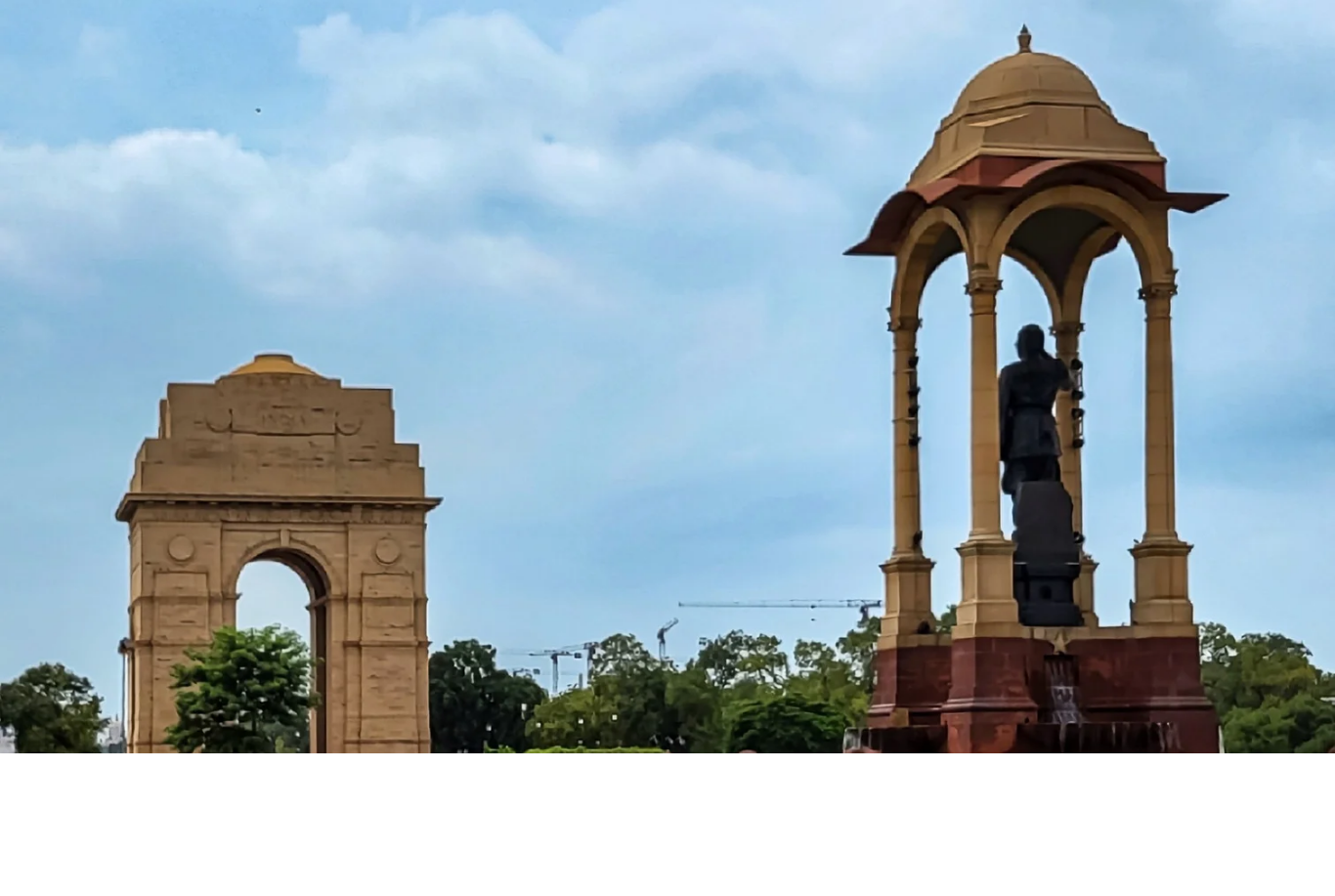
- India Gate: India Gate a New Delhi war memorial, honors 70,000 Indian soldiers who died in World War I. Its iconic arch features inscribed names and an eternal flame, symbolizing sacrifice and national pride.
- Jantar Mantar: Jantar Mantar is an 18th-century astronomical observatory in Delhi, with large instruments built by Maharaja Jai Singh II to study celestial bodies.
- Purana Qila: Purana Qila or Old Fort in Delhi is a 16th-century fort built by Humayun and Sher Shah Suri, possibly on the site of ancient Indraprastha. It features massive walls and gates, and represents layers of Delhi's historical periods.
- Lotus Temple: The Lotus Temple in Delhi, a Baháʼí House of Worship, is a white marble structure shaped like a lotus flower, symbolizing unity and open to all faiths.
- Akshardham Temple: Akshardham Temple in Delhi is a vast Hindu complex showcasing traditional Indian art, culture, and spirituality, featuring intricate carvings, a boat ride, film, and musical fountain show, all dedicated to Bhagwan Swaminarayan.
- Jama Masjid: A large mosque in Old Delhi built by Shah Jahan, is a red sandstone and marble structure with grand gateways and minarets, symbolizing Mughal architecture and Islamic faith.
- Gurudwara Bangla Sahib: Is a Sikh temple known for its golden dome, holy pond, and free community kitchen (Langar), honoring Guru Har Krishan and symbolizing selfless service.
- Raj Ghat: Raj Ghat in Delhi is a simple black marble platform marking Mahatma Gandhi's cremation site, with an eternal flame, symbolizing his enduring legacy of non-violence.
- The National Museum: The National Museum in Delhi houses 5,000+ years of Indian art and history, showcasing artifacts from ancient civilizations to modern times, including sculptures, paintings, and textiles.
- Lodhi Garden: Lodhi Garden in Delhi is a 90-acre park with 15th-16th century tombs from the Lodhi and Sayyid dynasties, offering a blend of historical architecture and natural beauty.
- Chandni Chowk: A historic Old Delhi market, offers a vibrant, chaotic mix of shopping, street food, and cultural landmarks.
- Dilli Haat: Dilli Haat is an open-air Delhi market showcasing Indian handicrafts and regional foods, with rotating artisan stalls in a village-like setting.
- Rashtrapati Bhavan: is the President of India's official residence, designed by Edwin Lutyens. It blends European and Indian architecture, features the Mughal Gardens, and hosts state functions.
Tourist Timings and Tips:-
- TIMINGS:
- Timings can vary, so it's always best to check the official websites of individual attractions.
- Generally Many museums open around 9:00 AM or 10:00 AM and close around 5:00 PM. It is very important to note that many attractions are closed on Mondays.
- SAFETY:
- Be aware of your surroundings and take necessary precautions, especially in crowded areas.
- It is always wise to use registered taxis or ride sharing apps.
- GENERAL ADVICE:-
- Be prepared for heavy traffic.
- Stay hydrated, especially during the summer months.
- Bargaining is common in markets.